

Table of Contents
I’ll never forget the morning I walked into my kitchen and was hit by the most horrific smell I’d ever encountered in my own home. I had fallen asleep while baking chicken the night before, and eight hours later, my kitchen smelled like a crematorium mixed with rotten eggs. The burnt smell had somehow traveled through our entire house, settling into furniture, curtains, and even our bedroom upstairs.
My husband took one whiff and immediately suggested we call a professional cleaning service, but I was determined to figure out how to eliminate odors myself. I spent the entire weekend trying every air freshener, candle, and spray I could find, but nothing worked. The awful smell would disappear for an hour, then return stronger than before. I was starting to panic that we’d have to replace our curtains, furniture, and maybe even repaint the walls.
That disaster taught me the difference between masking odors and actually eliminating them. Most people make the same mistake I did: they try to cover up smells instead of removing the source and neutralizing the odor molecules. Learning how to eliminate odors properly means understanding what causes different smells and using the right techniques to destroy them completely rather than just hiding them temporarily.
Why Learning How to Eliminate Odors Properly Matters
Household odors affect more than just comfort; they impact health, property values, and quality of life. Strong odors can trigger allergies, headaches, and respiratory issues, while persistent smells often indicate underlying problems like mold, pest infestations, or structural damage that require immediate attention.
The science behind odor elimination involves understanding that smells are actually tiny molecules floating in the air that attach to surfaces throughout your home. Simply spraying air freshener doesn’t remove these molecules; it just adds more competing scents. True odor elimination requires breaking down or removing the odor-causing molecules completely.
Professional odor elimination services charge $200 to $800 per room, but knowing how to eliminate odors yourself can handle 90% of household smell problems for under $50 in supplies. More importantly, you can address odors immediately rather than living with awful smells while waiting for professional appointments.
Signs You Need Better Odor Elimination Skills
Many people don’t realize their odor elimination attempts are actually making problems worse. If you’ve ever noticed smells returning shortly after cleaning, used multiple air fresheners without success, or had guests comment on odors you thought you’d eliminated, you need better techniques.
Common signs of ineffective odor elimination include layering different scented products that create competing smells, using harsh chemicals that damage surfaces without removing odors, or focusing on symptoms rather than sources. These approaches often create new problems while failing to solve the original odor issue.
You also need better odor elimination knowledge if you can’t identify smell sources, don’t know which products work for different odor types, or haven’t addressed underlying moisture or ventilation problems that allow odors to persist and return.
Root Causes of Persistent Household Odors
Most household odors persist because people treat symptoms rather than sources. Spraying air freshener over pet urine doesn’t eliminate the urine; it just adds floral scent to the urine smell. Understanding how to eliminate odors requires finding and treating the actual source of odor-causing molecules.
Moisture problems cause many persistent odors by creating environments where bacteria, mold, and mildew thrive. These organisms produce ongoing odor molecules that continue until moisture sources are eliminated and affected areas are properly treated and dried.
Poor ventilation allows odor molecules to accumulate and settle into porous surfaces like fabric, wood, and drywall. Without adequate air circulation, cooking odors, smoke, and other smells become embedded in materials where simple cleaning can’t reach them.
Many people also don’t understand that different odor types require different elimination methods. Protein-based odors like pet accidents need enzyme treatments, while smoke odors require oxidation techniques. Using wrong methods often sets odors deeper or creates chemical reactions that make problems worse.
How to Eliminate Odors: 4 Professional Methods
Method 1: Burnt Food Odor Elimination
Burnt food creates some of the most persistent household odors because the burning process releases complex chemical compounds that penetrate deeply into surfaces and linger for weeks without proper treatment. Learning how to eliminate odors from burnt food requires understanding these compounds and using multi-step neutralization techniques.
Start by removing all burnt food residue and cleaning affected cooking surfaces thoroughly with degreasing agents. Burnt particles continue releasing odor molecules until completely removed, so scrub cookware, ovens, and stovetops with baking soda paste and strong dish soap. Don’t just wipe surfaces; scrub to remove embedded particles.
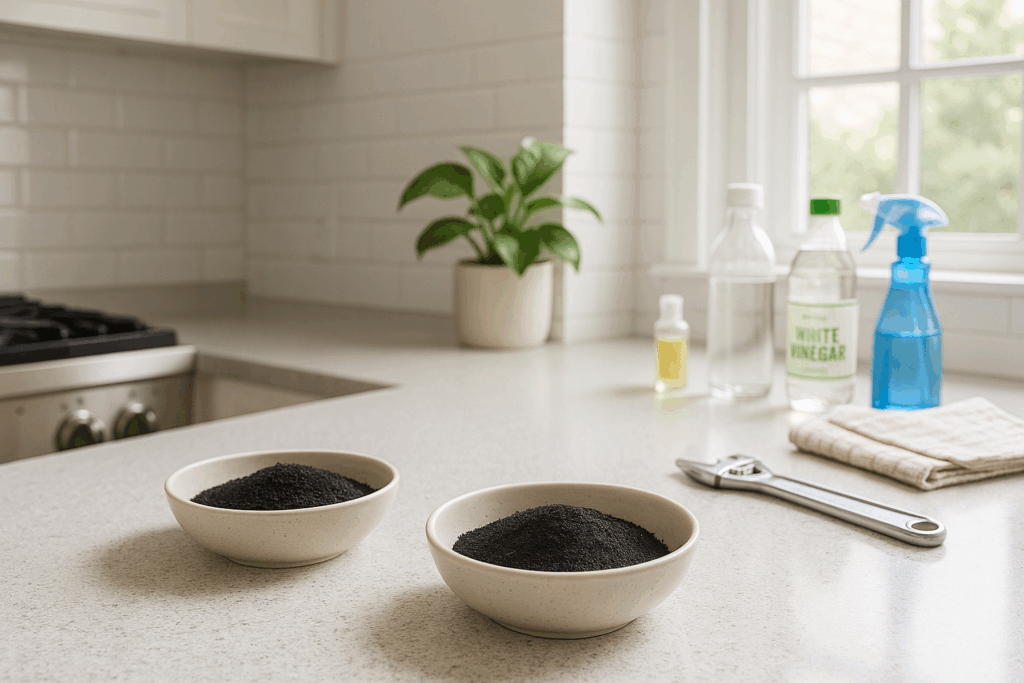
Create powerful odor absorption throughout your home using activated charcoal, which attracts and traps odor molecules more effectively than baking soda alone. Place bowls of activated charcoal in every room affected by the smell, replacing them every few days until odors disappear completely. Hardware stores sell activated charcoal specifically for odor elimination.
Neutralize airborne odor molecules using white vinegar steam treatments. Boil equal parts water and white vinegar in multiple pots throughout your home, allowing the steam to circulate for several hours. The acetic acid in vinegar breaks down burnt food compounds while the steam carries the neutralizing agent to all surfaces.
Address fabric and upholstery absorption by washing all removable textiles in hot water with enzyme detergent. For furniture and carpets, spray with white vinegar solution (one part vinegar to three parts water), let sit for 30 minutes, then blot thoroughly. The vinegar breaks down odor molecules embedded in fabric fibers.

Method 2: Pet Accident Odor Removal
Pet accidents create complex odor challenges because urine contains proteins, bacteria, and crystals that continue producing smells long after visible messes are cleaned. Understanding how to eliminate odors from pet accidents requires breaking down all components of the accident, not just cleaning the surface stain.
Never use ammonia-based cleaners on pet accidents, as ammonia smells similar to urine and may encourage repeat accidents in the same location. Instead, blot up as much liquid as possible immediately, working from outside the accident toward the center to prevent spreading.
Apply enzyme cleaners specifically designed for pet accidents, which contain bacteria that literally eat the odor-causing compounds in urine. Soak the area thoroughly with enzyme cleaner, ensuring it penetrates as deeply as the original accident. Cover treated areas with plastic and let enzymes work for 24-48 hours before cleaning.
For old or set-in pet odors, use hydrogen peroxide treatments after enzyme cleaning. Mix equal parts 3% hydrogen peroxide and water, add a few drops of dish soap, and apply to affected areas. The hydrogen peroxide oxidizes remaining odor compounds that enzymes might miss, but test on inconspicuous areas first as it can bleach some materials.
Address subfloor and padding contamination in severe cases by lifting carpet and treating underlying surfaces. Pet accidents often soak through carpet into padding and subfloors, where standard surface cleaning can’t reach. You may need to replace padding and seal subfloors with odor-blocking primer before replacing carpet.
Method 3: Smoke Damage Odor Elimination
Smoke odors penetrate deeply into every porous surface and require comprehensive treatment approaches that address both airborne particles and embedded residues. How to eliminate odors from smoke involves understanding that smoke particles are incredibly small and sticky, adhering to surfaces throughout your home.
Begin with thorough cleaning of all surfaces using tri-sodium phosphate (TSP) solution, which cuts through smoke residue more effectively than standard cleaners. Wash walls, ceilings, and all hard surfaces with TSP solution, working from top to bottom to prevent streaking and ensure complete residue removal.
Replace all HVAC filters and have ductwork professionally cleaned, as smoke particles circulate through heating and cooling systems and settle throughout the ductwork. Standard air filters can’t capture all smoke particles, and contaminated ductwork continues redistributing odors long after the smoke source is removed.
Use ozone generators for severe smoke contamination, but follow safety protocols carefully as ozone can be harmful to humans and pets. Run ozone generators in unoccupied spaces for specific time periods based on room size and contamination level. Ozone breaks down odor molecules at the chemical level but requires proper ventilation afterward.
Treat fabrics and upholstery with specialized smoke odor eliminators that contain enzymes and oxidizers specifically designed for smoke compounds. Many fabrics can be salvaged with proper treatment, but severely contaminated items may require professional restoration or replacement to completely eliminate odors.

Method 4: Mystery Odor Investigation and Elimination
Unidentified odors often prove most challenging because you can’t treat the source until you find it. Learning how to eliminate odors you can’t locate requires systematic investigation techniques combined with general odor elimination strategies that work regardless of the source.
Conduct systematic odor mapping by moving through your home methodically, noting where smells are strongest and weakest. Odors typically intensify near their sources, so create a mental map of smell intensity to guide your investigation. Check areas where odors commonly develop: under sinks, behind appliances, in basements, and around plumbing fixtures.
Investigate common hidden odor sources including dead rodents in walls, mold growth in hidden areas, sewer gas leaks, rotting food in forgotten locations, and moisture problems behind walls or under floors. Use your nose like a bloodhound, following smell trails to their strongest points.
Eliminate general household odors while investigating by using broad-spectrum odor eliminators that work on multiple odor types. Activated charcoal, white vinegar, and enzyme cleaners address many different odor sources simultaneously while you continue searching for specific causes.
Monitor humidity levels throughout your home, as excess moisture creates conditions for odor-producing mold, mildew, and bacterial growth. Use dehumidifiers to maintain humidity between 30-50% and ensure adequate ventilation in bathrooms, kitchens, and basements where moisture problems commonly develop.
Implementation: Creating Your Odor Elimination System
Developing a comprehensive odor elimination system ensures you can address any smell problem quickly and effectively. How to eliminate odors successfully depends on having the right supplies immediately available and understanding which techniques work for different situations.
Stock essential odor elimination supplies including activated charcoal, white vinegar, baking soda, enzyme cleaners, hydrogen peroxide, and TSP cleaner. These items handle most household odor problems and cost much less than repeated purchases of temporary air fresheners that don’t solve underlying problems.
Create an odor elimination action plan that prioritizes source identification, immediate containment, and systematic treatment approaches. Having a planned response reduces panic and ensures you address odors effectively rather than wasting time and money on ineffective solutions.
Maintain proper ventilation throughout your home by using exhaust fans, opening windows regularly, and ensuring HVAC systems circulate air effectively. Good ventilation prevents odor accumulation and helps elimination treatments work more effectively by removing treated odor molecules from your home.
Troubleshooting Persistent Odor Problems
Some odors resist standard elimination techniques and require more aggressive or specialized approaches. Understanding why certain odors persist helps you choose appropriate escalation strategies without damaging your home or wasting money on ineffective treatments.
Layered odors from multiple sources often require treating each odor type separately rather than using general approaches. Pet accidents mixed with cleaning product residues, or cooking odors combined with tobacco smoke, need systematic treatment of each component for complete elimination.
Structural issues like moisture intrusion, pest infestations, or sewer problems require professional intervention beyond standard odor elimination techniques. If odors return quickly after treatment or seem to originate from within walls or structural areas, address underlying problems before attempting cosmetic odor elimination.
Chemical interactions between different cleaning products can create new odors or set existing odors permanently. Never mix different cleaning chemicals, and allow previous treatments to dry completely before applying new products. Some combinations create toxic gases or chemical reactions that make odor problems much worse.
Old or set-in odors may require multiple treatment cycles and patience for complete elimination. Odor molecules that have been present for months or years often require repeated treatments and time for complete neutralization. Don’t expect instant results from severe odor problems that developed over extended periods.
Daily Integration: Preventing Future Odor Problems
The most effective odor elimination strategy is preventing odors from developing in the first place through good household maintenance and immediate response to potential odor sources. How to eliminate odors includes understanding prevention techniques that keep your home consistently fresh.
Address spills and accidents immediately rather than letting them set and develop into odor problems. Quick response prevents odor molecules from penetrating deeply into surfaces where they become much harder to eliminate completely.
Maintain regular cleaning schedules that include odor-prone areas like garbage disposals, refrigerators, pet areas, and bathrooms. Regular maintenance prevents odor buildup and keeps small problems from becoming major elimination challenges.
Control moisture levels throughout your home using dehumidifiers, exhaust fans, and proper ventilation. Most household odors develop in moist environments, so moisture control prevents many odor problems before they start.
Educate family members about odor prevention and immediate response techniques so everyone contributes to maintaining a fresh home environment. Teaching children to clean up spills immediately and report potential odor sources helps prevent problems from developing unnoticed.
Understanding how to eliminate odors effectively transforms your home from a place where smells accumulate and persist into a consistently fresh, welcoming environment. These four professional methods address the most common and challenging household odors while teaching you the principles needed to tackle any smell problem confidently. Remember that successful odor elimination requires patience, proper techniques, and addressing sources rather than just symptoms, but the results are worth the effort when your home consistently smells clean and fresh.