

Table of Contents
I was standing in the cleaning supply aisle at Target, calculator in hand, adding up the cost of replacing all our household cleaners. Glass cleaner: $4.50. All-purpose cleaner: $5.25. Bathroom cleaner: $6.75. Degreaser: $7.50. The total came to over $60 for basic cleaning supplies that would last maybe six weeks. I stared at those numbers in disbelief, realizing I was spending over $500 annually just on cleaning products.
That moment of sticker shock happened right after my youngest daughter developed severe asthma, and our pediatrician suggested reducing chemical exposure in our home. I was caught between wanting to keep our house clean and safe while protecting my daughter’s health and our family budget. I had no idea how to make homemade cleaners that actually worked, and I was skeptical that anything I could mix in my kitchen would clean as well as the powerful commercial products I’d always relied on.
Three years later, I’ve completely replaced every commercial cleaner in our home with homemade versions that cost about 90% less to make and work better than anything I ever bought. Learning how to make homemade cleaners revolutionized both our household budget and our family’s health while giving me confidence that I can keep our home spotless using simple, safe ingredients.
Why Learning How to Make Homemade Cleaners Saves Money
The average household spends $600-800 annually on cleaning products, but families who learn how to make homemade cleaners spend less than $60 yearly for the same cleaning power. Commercial cleaners typically contain 90-95% water and simple ingredients that cost pennies, yet retailers charge premium prices for convenient packaging and brand names.
Understanding the science behind how to make homemade cleaners reveals that most commercial products use the same basic ingredients: acids for dissolving mineral deposits, bases for cutting grease, surfactants for lifting dirt, and antimicrobial agents for killing germs. These ingredients are readily available and inexpensive when purchased separately.
Homemade cleaners also eliminate exposure to harsh chemicals, synthetic fragrances, and preservatives that can trigger allergies, asthma, and other health issues. Many commercial cleaners contain ingredients that environmental health experts recommend avoiding, especially in homes with children or family members with respiratory sensitivities.
Signs You Need to Switch to Homemade Cleaners
Many families continue buying expensive commercial cleaners without realizing how much money they’re wasting or how easy it is to make equally effective alternatives. If you spend more than $30 monthly on cleaning supplies, cringe at cleaning product prices, or have family members with chemical sensitivities, you need to learn how to make homemade cleaners.
Common signs that homemade cleaners would benefit your household include running out of specific cleaners frequently, avoiding cleaning tasks because you don’t have the right products, or feeling overwhelmed by the cost and number of different cleaners commercial marketing convinces you to buy.
You also need homemade cleaner knowledge if you’re concerned about ingredient safety, want to reduce packaging waste, or simply enjoy the satisfaction of creating effective household products yourself rather than paying premium prices for basic cleaning chemistry.
Root Causes of High Cleaning Product Costs
Commercial cleaning companies charge premium prices because consumers don’t understand that most cleaners contain simple, inexpensive ingredients mixed with large amounts of water. Marketing creates the illusion that different cleaning tasks require specialized products, when in reality a few basic formulations handle virtually all household cleaning needs.
Convenience packaging adds significant cost to commercial cleaners without adding cleaning value. Spray bottles, fancy labels, and brand marketing can triple the cost of basic cleaning ingredients, yet these features don’t improve actual cleaning performance or results.
Many people buy multiple specialized cleaners because they don’t understand that learning how to make homemade cleaners provides versatile solutions that work for multiple cleaning tasks. This product multiplication unnecessarily increases costs while cluttering storage areas with redundant cleaning supplies.
Lack of knowledge about basic cleaning chemistry prevents people from recognizing that expensive commercial cleaners often perform no better than simple homemade alternatives using ingredients that cost 90% less than branded products.
How to Make Homemade Cleaners: 12 Powerful Recipes
Recipe 1: Ultimate All-Purpose Cleaner
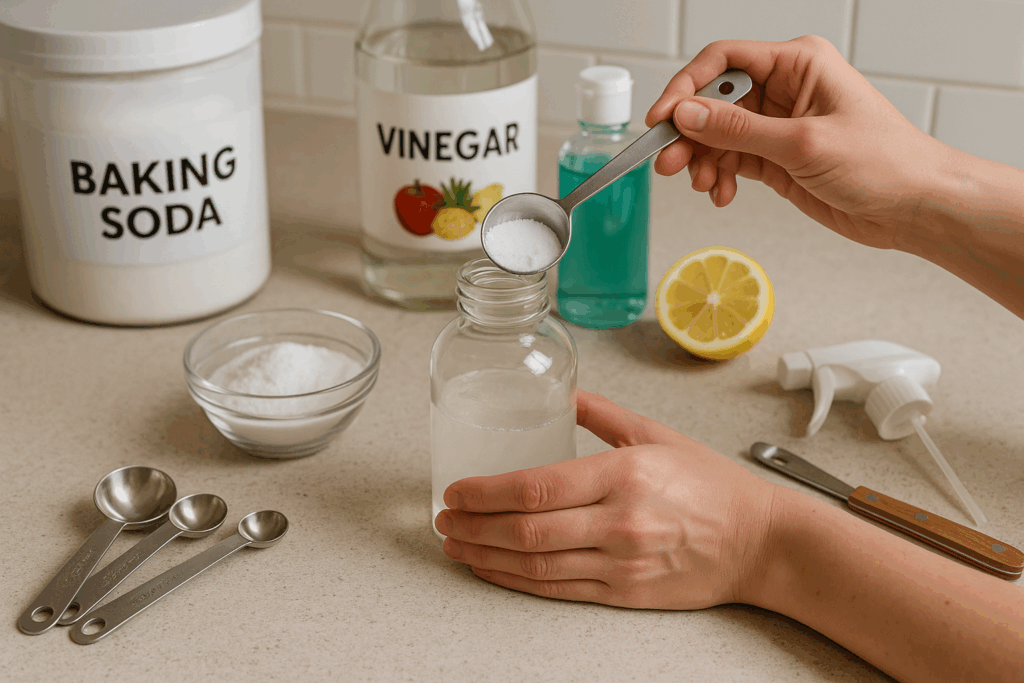
This versatile cleaner handles 90% of household cleaning tasks and costs about $0.15 per bottle compared to $4-6 for commercial equivalents. Learning how to make homemade cleaners starts with mastering this fundamental recipe that works on most surfaces safely and effectively.
Combine 1 cup white vinegar, 1 cup water, 2 tablespoons dish soap, and 10-15 drops essential oil in a spray bottle. The vinegar provides acid cleaning power for mineral deposits and soap scum, while dish soap adds grease-cutting surfactants and essential oils provide natural antimicrobial properties plus pleasant scent.
This formula works excellently on countertops, appliances, bathroom fixtures, mirrors, and most hard surfaces except natural stone like marble or granite, where acid can cause etching. For stone surfaces, substitute the vinegar with rubbing alcohol to maintain cleaning power without acid damage.
Shake well before each use as ingredients naturally separate over time. This separation is normal and doesn’t affect cleaning performance. The cleaner stays effective for several months when stored in a cool, dark location away from direct sunlight.
Test on inconspicuous areas before using on new surfaces, especially painted or delicate finishes. While this formula is gentle and safe, different surfaces may react differently to cleaning ingredients.
Recipe 2: Heavy-Duty Degreaser
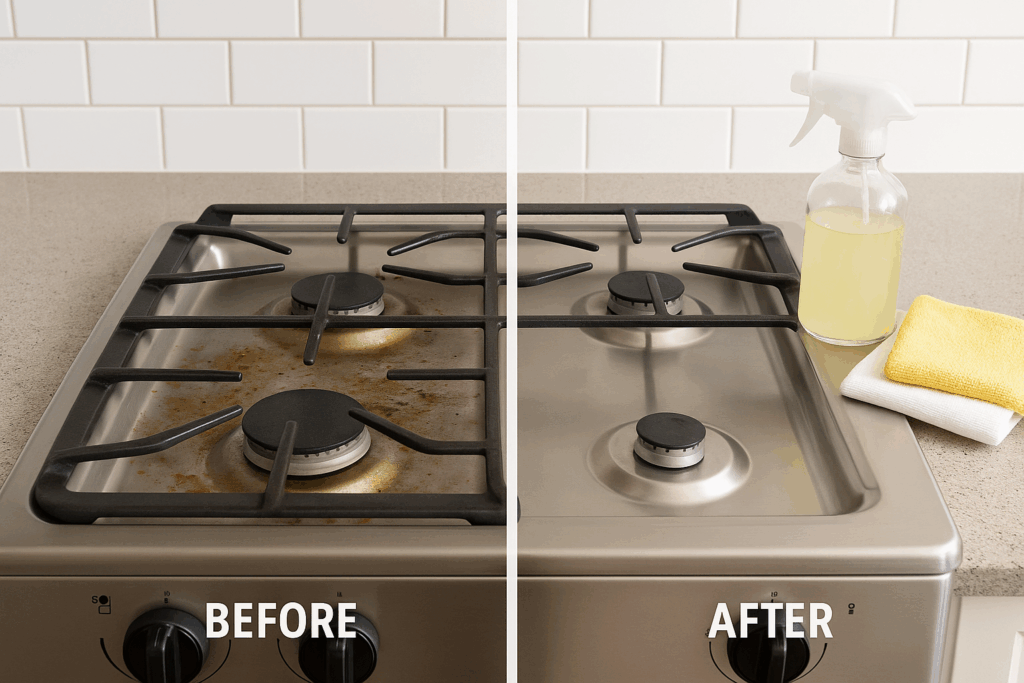
This powerful degreaser cuts through kitchen grease and grime more effectively than most commercial products while costing under $0.50 per bottle. Understanding how to make homemade cleaners includes mastering grease removal for tough cleaning challenges.
Mix 2 cups hot water, 1/2 cup white vinegar, 1/4 cup rubbing alcohol, and 1 tablespoon dish soap in a spray bottle. The combination of hot water, alcohol, and concentrated dish soap breaks down grease molecules while vinegar cuts through buildup and residue.
For extra heavy-duty cleaning, add 2 tablespoons baking soda to create mild abrasive action that helps scrub away stubborn grease without scratching surfaces. The baking soda also provides additional alkaline cleaning power for protein-based soils.
This formula works exceptionally well on range hoods, oven interiors, barbecue grills, and heavily soiled kitchen surfaces. Apply generously, let sit for 5-10 minutes on tough grease, then wipe clean with microfiber cloths for best results.
Store this degreaser in clearly labeled bottles and keep away from children due to the rubbing alcohol content. While safe for cleaning use, rubbing alcohol should not be accessible to small children.
Recipe 3: Disinfecting Cleaner
This antimicrobial cleaner kills 99.9% of household germs while costing less than $0.25 per bottle compared to $5-8 for commercial disinfectants. Learning how to make homemade cleaners includes creating effective sanitizing solutions for health protection.
Combine 1 cup water, 1 cup rubbing alcohol (70% isopropyl), and 1 teaspoon dish soap in a spray bottle. The 50% alcohol concentration provides effective antimicrobial action against bacteria, viruses, and fungi while dish soap helps the solution spread evenly and cling to surfaces.
For enhanced disinfecting power, add 10-15 drops tea tree oil, which provides additional natural antimicrobial properties and pleasant scent. Tea tree oil has been scientifically proven effective against many household pathogens.
Allow this disinfectant to sit on surfaces for at least 30 seconds before wiping to ensure adequate contact time for germ killing. The alcohol evaporates quickly, so don’t let surfaces air dry completely before wiping if you want to remove dead germs and debris.
This formula works excellently on doorknobs, light switches, countertops, bathroom fixtures, and other high-touch surfaces where germ control is important. Avoid using on screens, painted surfaces, or materials that alcohol might damage.
Recipe 4: Glass and Mirror Cleaner
This streak-free glass cleaner provides crystal-clear results while costing about $0.10 per bottle compared to $3-5 for commercial glass cleaners. Understanding how to make homemade cleaners includes achieving professional-quality glass cleaning results.
Mix 2 cups water, 1/2 cup white vinegar, and 1/4 cup rubbing alcohol in a spray bottle. The vinegar cuts through soap scum and water spots while alcohol provides quick drying and streak prevention. This combination evaporates cleanly without leaving residue.
For extra streak prevention, add 1 tablespoon cornstarch to the mixture. The cornstarch helps absorb oils and residues that can cause streaking, then rinses away cleanly with the liquid components.
Use this cleaner with microfiber cloths or newspaper for best results. Spray surfaces lightly and wipe in circular motions, then finish with vertical strokes for perfectly streak-free glass and mirrors.
This formula works excellently on windows, mirrors, glass shower doors, and any glass surfaces throughout your home. Avoid using on tinted windows or surfaces where vinegar might cause damage.
Recipe 5: Bathroom Mold and Mildew Remover
This powerful anti-fungal cleaner eliminates mold and mildew while preventing regrowth, costing under $0.30 per bottle compared to $6-10 for commercial mold removers. Learning how to make homemade cleaners includes addressing serious bathroom cleaning challenges.
Combine 1 cup water, 1 cup white vinegar, 2 tablespoons baking soda, and 10 drops tea tree oil in a spray bottle. Add baking soda slowly to prevent excessive foaming. The acid-base reaction creates cleaning action while tea tree oil provides natural anti-fungal properties.
For severe mold problems, make a paste with baking soda and water, apply to affected areas, spray with vinegar solution, let bubble for 10 minutes, then scrub with an old toothbrush before rinsing thoroughly.
This cleaner works excellently on shower grout, bathroom tiles, and areas prone to mold growth. Regular use prevents mold establishment while removing existing growth safely without harsh bleach chemicals.
Ensure adequate ventilation when using this cleaner, especially in small bathrooms. While safer than commercial mold removers, proper air circulation improves comfort and speeds drying time.
Recipe 6: Hardwood Floor Cleaner
This gentle yet effective floor cleaner protects wood finishes while providing thorough cleaning for about $0.20 per bottle compared to $5-8 for commercial wood floor cleaners. Understanding how to make homemade cleaners includes caring for expensive flooring safely.
Mix 1/2 cup white vinegar, 1 gallon warm water, and 2 tablespoons olive oil in a bucket or large container. The diluted vinegar cleans without damaging wood finishes while olive oil provides conditioning and shine enhancement.
For heavily soiled floors, add 2 tablespoons liquid castile soap to provide additional cleaning power without harsh chemicals that can damage wood finishes over time.
Apply with a well-wrung mop to avoid over-wetting wood floors, which can cause warping or finish damage. This solution cleans effectively while evaporating quickly to prevent moisture problems.
Test on inconspicuous areas before full use, especially on newer floors or unusual finishes. While this formula is safe for most wood floors, different finishes may react differently to cleaning ingredients.
Recipe 7: Carpet Stain Remover
This powerful stain remover tackles most carpet stains while costing under $0.40 per bottle compared to $4-7 for commercial carpet cleaners. Learning how to make homemade cleaners includes addressing expensive carpet cleaning needs.
Combine 1 cup warm water, 1/4 cup white vinegar, 1 tablespoon dish soap, and 1 tablespoon baking soda in a spray bottle. The combination provides acid cleaning, grease cutting, and mild abrasive action for comprehensive stain removal.
For protein stains like blood or food, add 1 tablespoon hydrogen peroxide to provide additional cleaning power through oxidation. However, test hydrogen peroxide on inconspicuous carpet areas first as it can bleach some carpet fibers.
Apply to stains immediately, blot with clean cloths working from outside toward center, then rinse with clean water and blot dry. Never rub or scrub carpet stains as this can damage fibers and spread stains.
This formula works on most common household stains including food spills, pet accidents, and dirt. For severe or set-in stains, multiple treatments may be necessary for complete removal.
Recipe 8: Oven and Grill Cleaner
This heavy-duty cleaner tackles baked-on grease and food residue while costing about $0.60 per application compared to $8-12 for commercial oven cleaners. Understanding how to make homemade cleaners includes handling tough kitchen cleaning challenges safely.
Create a paste with 1 cup baking soda, 1/4 cup dish soap, and enough water to form spreadable consistency. Add 2 tablespoons vinegar for extra cleaning power through acid-base reaction and foaming action.
Apply paste generously to cool oven surfaces, let sit for several hours or overnight, then spray with vinegar solution to reactivate cleaning action before scrubbing with non-abrasive sponges and rinsing thoroughly.
This method requires more time than commercial oven cleaners but provides safer cleaning without harsh caustic chemicals that can damage oven surfaces or create toxic fumes during heating.
Remove oven racks and clean separately in bathtub or utility sink using the same paste method. This prevents cross-contamination and allows more thorough cleaning of both racks and oven interior.
Recipe 9: Toilet Bowl Cleaner
This effective toilet cleaner disinfects and removes stains while costing about $0.15 per application compared to $3-5 for commercial toilet cleaners. Learning how to make homemade cleaners includes maintaining bathroom hygiene economically.
Pour 1/2 cup baking soda into toilet bowl, add 1/4 cup white vinegar, let bubble for 5 minutes, then scrub with toilet brush and flush. The acid-base reaction provides cleaning action while eliminating odors and mineral deposits.
For tough stains, make a paste with baking soda and hydrogen peroxide, apply to stain lines, let sit for 30 minutes, then scrub and rinse. The hydrogen peroxide provides bleaching action for stubborn discoloration.
Add 10 drops tea tree oil to vinegar for additional antimicrobial properties and pleasant scent. Tea tree oil provides natural disinfecting power while improving the overall cleaning experience.
Use this treatment weekly for regular maintenance or as needed for thorough cleaning. Regular use prevents buildup that requires more aggressive cleaning methods.
Recipe 10: Stainless Steel Cleaner
This specialized cleaner removes fingerprints and water spots from stainless steel while providing protective shine, costing about $0.25 per bottle compared to $4-6 for commercial stainless steel cleaners. Understanding how to make homemade cleaners includes caring for expensive appliances.
Mix 1 cup water, 1/4 cup white vinegar, and 2 tablespoons olive oil in a spray bottle. The vinegar removes water spots and fingerprints while olive oil provides protective coating and brilliant shine.
Apply with microfiber cloth, wiping in direction of stainless steel grain for best results. The oil component helps prevent future fingerprint adhesion while maintaining the natural beauty of stainless steel surfaces.
For heavily soiled stainless steel, clean first with vinegar solution alone, rinse with clean water, dry thoroughly, then apply oil component for protection and shine.
This formula works excellently on refrigerators, dishwashers, range hoods, and other stainless steel appliances throughout your kitchen while protecting the finish from future soiling.
Recipe 11: Fabric Softener and Static Reducer
This natural fabric softener replaces expensive commercial products while providing superior softness and static reduction for about $0.05 per load compared to $0.25-0.40 for commercial fabric softeners. Learning how to make homemade cleaners includes laundry care solutions.
Combine 2 cups white vinegar, 1 cup hair conditioner (any inexpensive brand), and 3 cups water in large container. Mix thoroughly and store in original fabric softener container or other large bottle with pour spout.
Use 1/4 cup per load in fabric softener dispenser or during rinse cycle. The vinegar neutralizes soap residue that makes fabrics stiff while conditioner provides softening agents that commercial products use.
This formula eliminates static cling more effectively than many commercial products while leaving clothes soft and fresh-smelling. The vinegar scent dissipates completely during drying, leaving no residual odor.
Add essential oils for custom scenting if desired, using 10-15 drops per batch. Lavender, lemon, or eucalyptus oils provide pleasant natural scents without synthetic fragrances that can trigger sensitivities.
Recipe 12: Air Freshener and Odor Eliminator
This natural air freshener eliminates odors rather than masking them while costing about $0.30 per bottle compared to $3-5 for commercial air fresheners. Understanding how to make homemade cleaners includes addressing household odor problems naturally.
Mix 2 cups water, 2 tablespoons baking soda, and 10-15 drops essential oils in spray bottle. Shake well before each use. The baking soda neutralizes odors while essential oils provide pleasant natural scenting.
For enhanced odor elimination, add 1/4 cup white vinegar to the mixture. Vinegar neutralizes many odor compounds while evaporating cleanly without leaving residual scent.
This formula works excellently for eliminating cooking odors, pet smells, and general household odors without adding synthetic chemicals or masking fragrances that can trigger respiratory sensitivities.
Customize scents by choosing different essential oil combinations: lavender for relaxation, citrus for energizing, eucalyptus for freshness, or peppermint for invigoration.

Implementation: Building Your Homemade Cleaner System
Creating a complete homemade cleaning system requires initial supply investment and organization, but provides ongoing savings and cleaning effectiveness that outperforms commercial products. Learning how to make homemade cleaners successfully involves systematic approach and proper storage.
Stock essential base ingredients including white vinegar, baking soda, liquid dish soap, rubbing alcohol, hydrogen peroxide, essential oils, and olive oil. These ingredients create every cleaner you need while costing less than $25 for supplies that last 6-12 months.
Invest in quality spray bottles, measuring cups, and storage containers that make mixing and using homemade cleaners convenient and effective. Good equipment encourages consistent use while ensuring professional-quality results.
Label all homemade cleaners clearly with ingredients and use instructions to ensure safety and proper application. Clear labeling prevents confusion and helps family members use cleaners correctly.
Troubleshooting Common Homemade Cleaner Issues
Some people experience problems with homemade cleaners because they expect identical performance to commercial products without understanding that different formulations may require slightly different application techniques for optimal results.
Separation of ingredients is normal and doesn’t indicate product failure. Shake bottles before use to remix ingredients, and understand that separation actually proves you’re using pure ingredients without synthetic stabilizers.
Adjusting recipes for local water conditions may be necessary, as hard water can affect cleaning performance. Add slightly more vinegar or use distilled water if your tap water interferes with cleaning effectiveness.
Surface compatibility varies, so always test new cleaners on inconspicuous areas before full use. While homemade cleaners are generally safer than commercial products, different surfaces may react differently to various ingredients.
Daily Integration: Making Homemade Cleaners Routine
Successful transition to homemade cleaners requires developing new habits and adjusting expectations while discovering that natural cleaning can be more effective and satisfying than commercial alternatives.
Schedule regular mixing sessions to maintain cleaner supplies rather than running out and reverting to commercial products. Mixing several cleaners at once is efficient and ensures consistent availability.
Involve family members in making and using homemade cleaners to build support for the transition while teaching valuable self-sufficiency skills. Children especially enjoy participating in safe, natural product creation.
Track savings and health improvements to maintain motivation for continuing homemade cleaner use. Many families notice reduced allergies, respiratory issues, and household chemical odors after switching to natural alternatives.
Gradually expand your homemade cleaner repertoire as you gain confidence and experience with basic recipes. Starting with a few essential cleaners builds skills and confidence for creating more specialized products later.
Understanding how to make homemade cleaners transforms household cleaning from expensive chore requiring multiple commercial products into economical, effective system using simple, safe ingredients. These twelve recipes provide complete household cleaning capability while saving hundreds of dollars annually and reducing chemical exposure for your family. Remember that successful homemade cleaner use combines proper recipes with appropriate application techniques, but the financial and health benefits make the learning process worthwhile for families committed to natural, economical household management.